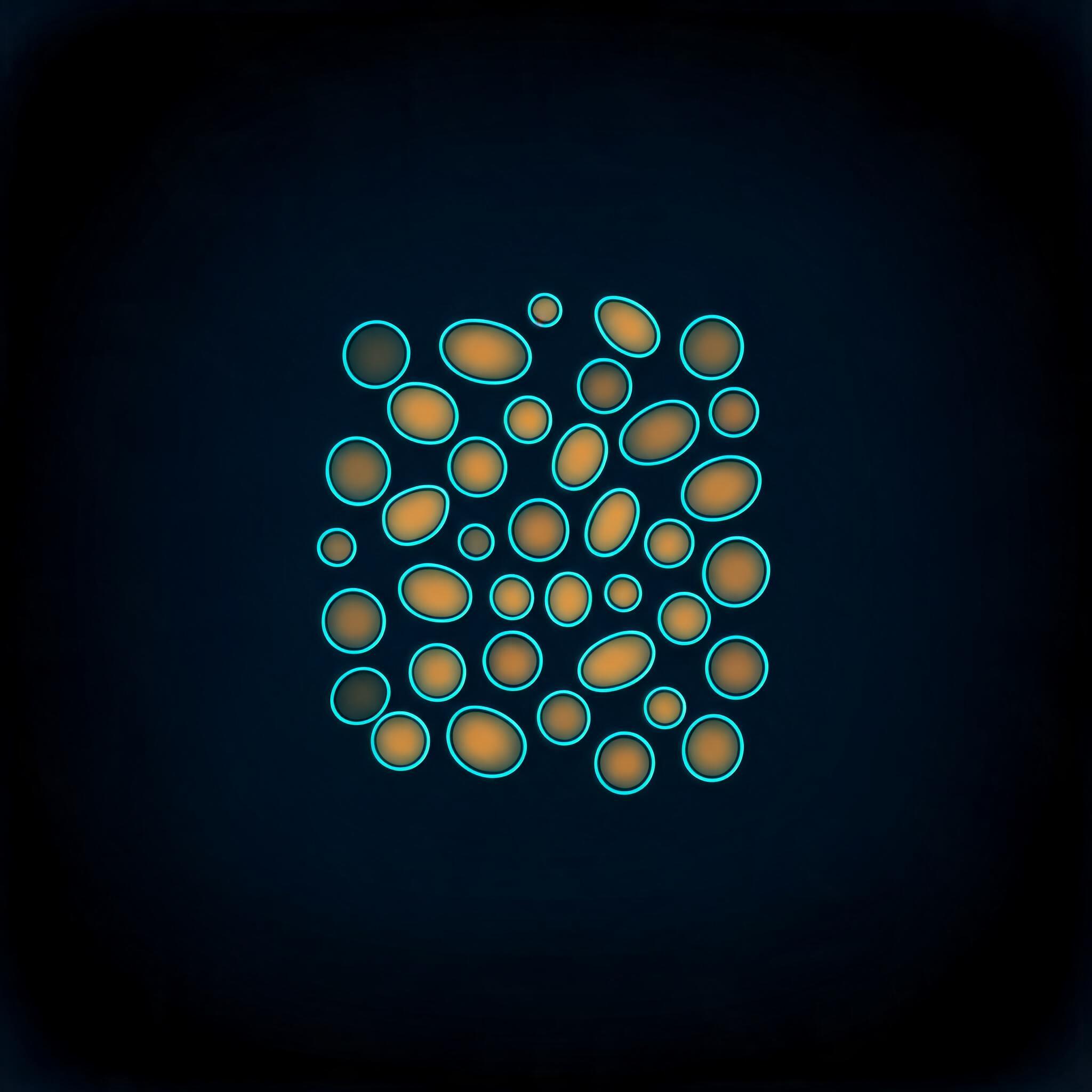
Illustration generated with AI; not experimental data.
Physics-Based Image Generation
juspice.shape_based is the physics-based part of JuSPICE’s
synthetic data toolkit. It builds synthetic microscopy
images out of simple shapes — round, Gaussian-intensity particle blobs and
wavy crack lines, plus configurable noise — with no trained model and no
GPU required.
Overview
Since these images are built by drawing shapes directly, JuSPICE knows exactly where every shape is — so the mask (which pixels belong to which object) is always exact, never guessed. That makes this method well suited for:
checking how well a segmentation algorithm performs,
generating labeled training data for supervised learning,
checking that a feature-extraction pipeline works correctly.
Typical usage
All physics-based generation methods are accessed through the
ShapeBasedAccessor via spice.shape_based.
Start by loading a real image as the background, then chain drawing calls
in-place:
from juspice.io import load_data, save_data

spice = load_data("background.png")

# Initialise a drawing session (sets canvas size from the background)
spice.shape_based.create(
    width=512, height=512,
    background_img_path="background.png",
)

# Add shapes — all calls mutate spice.data in place
spice.shape_based.generate_gaussian_circles(
    lighting_mode="dark", num_objects=50, radii=(5, 30),
)
spice.shape_based.generate_wiggly_cracks(
    crack_type="polynomial", num_cracks=5, length=150,
)

# Derive a multi-frame sequence (returns a new SPICEData)
frame_spice = spice.shape_based.generate_sequence(num_objects=10)

save_data(spice)
Every accessor call is automatically recorded into spice.history with
its runtime argument values, making the pipeline fully reproducible via
to_lines() or
to_script().
Reproducibility
Physics-based generation calls inside a
Tracker recording block are captured verbatim in
the session-level _history.py. The <stem>.json sidecar records every
spice.shape_based.* call and its parameters via
DatasetHistory.
See also
Synthetic Data — overview of JuSPICE’s full synthetic data generation suite
juspice.shape_based — Physics-Based Image Generation — full API reference