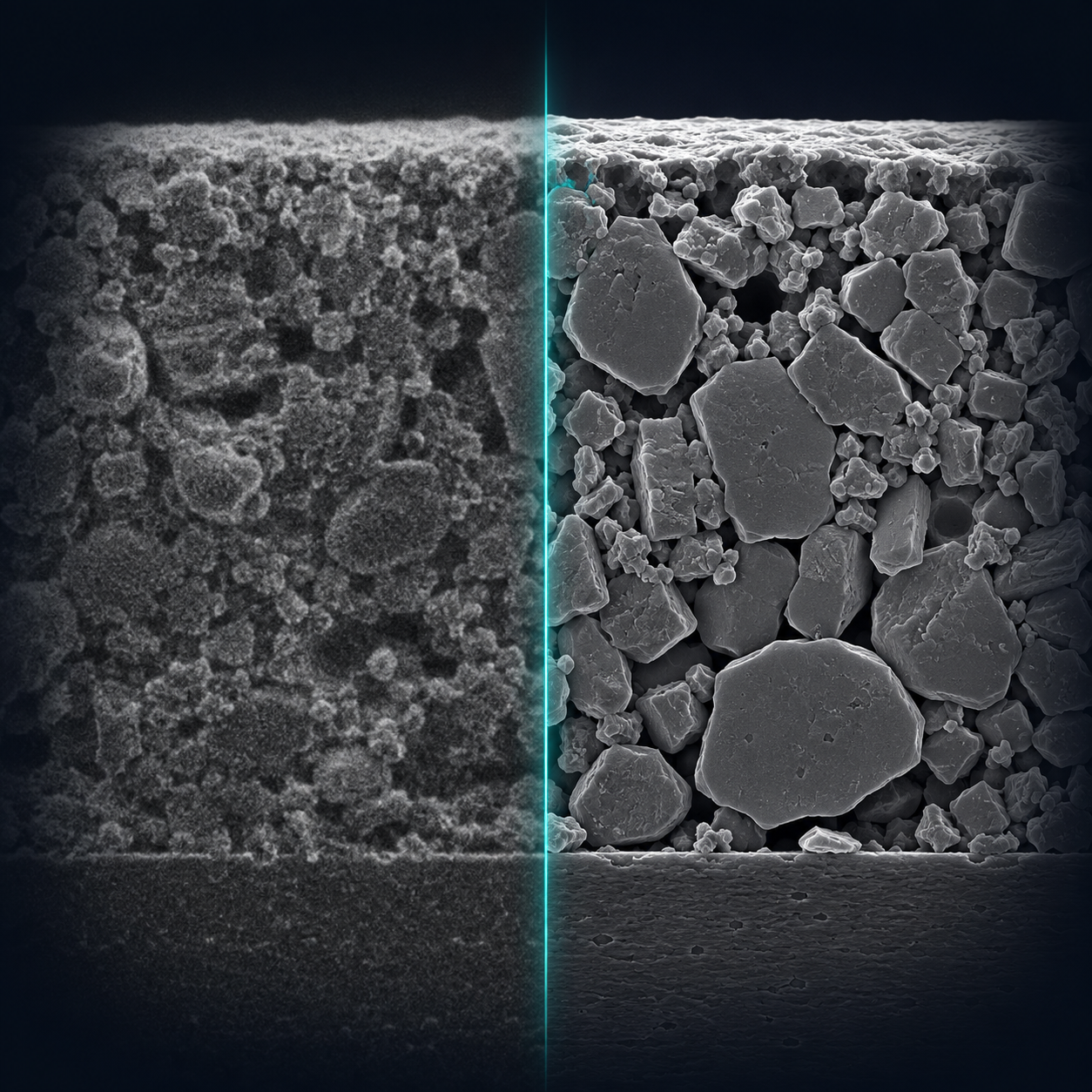
Illustration generated with AI; not experimental data.
Preprocessing
“Preprocessing” means cleaning up and preparing an image before you
analyze it further — things like fixing brightness, resizing, or
sharpening edges. It’s a built-in capability of
SPICEData, reached through its preprocess
property. Every spice.preprocess.<method>() call works directly on
spice.data, changes it in place, automatically records what it did
into spice.history (with the exact values you used), and returns
spice itself, so you can call .preprocess again right after.
spice.preprocess
No separate object needs to be constructed — spice.preprocess is
accessed directly on any loaded SPICEData:
from juspice.io import load_data

spice = load_data('image.tif')
spice.preprocess.equalize_histogram()
spice.preprocess.normalize()
spice.preprocess.binarize(threshold=0.5)
Each call returns spice, so calls can be chained by re-accessing
.preprocess:
spice.preprocess.equalize_histogram() \
     .preprocess.normalize() \
     .preprocess.binarize(threshold=0.5)
Two methods are exceptions to the “returns spice” rule:
label_components()returns(num_labels, labels, stats, centroids)directly, since it has multiple outputs.spice.datais still updated in place to the labeled image.show_image()andshow_labels()are visualization-only and returnNone.
Chaining does not continue past either of these — re-access
spice.preprocess afterward to keep going.
Available methods
equalize_histogram()— histogram equalisation for contrast enhancement.normalize()— min–max rescaling to[0, 1].standardize()— zero-mean, unit-variance rescaling.resize()— resize to a target width/height.downsample()— stride-based downsampling by an integer factor.apply_filter()—'blur','gaussian', or'median'filtering.edge_detection()—'canny','sobel', or'laplacian'edge detection.morphological_operation()—'dilation','erosion','opening', or'closing'.binarize()— threshold-based binarisation.label_components()— connected-component labelling (4- or 8-connectivity).show_image()/show_labels()— matplotlib visualization helpers.
Reproducibility
Operations applied through spice.preprocess are recorded into
DatasetHistory as preprocess.<method> entries,
using the actual runtime argument values. They appear in the <stem>.json
sidecar and reconstruct as direct spice.preprocess.<method>(...) calls in
to_lines() and
to_script() — no intermediate
preprocessor object or manual copy-back step is needed.
When used inside a Tracker recording block, every
call is additionally captured verbatim in the session-level _history.py.
See also
juspice.preprocess_module — full API reference
Image Preprocessing — domain background